The term "pyrethrin" is used very haphazardly in the industry.
Pesticide formulation manufacturers' purchasing departments, organic farming brand formulators, and pet product development teams sometimes use the same term to communicate about completely different things. Only after receiving quotes and samples do they realize they're referring to completely different ingredients.
This confusion isn't just a matter of terminology. The differences between natural pyrethrins and pyrethroids in terms of origin, structure, regulatory status, and applicable scenarios can determine whether a product can be marketed, obtain organic certification, or be used on pets.
Why is it so easily confused?
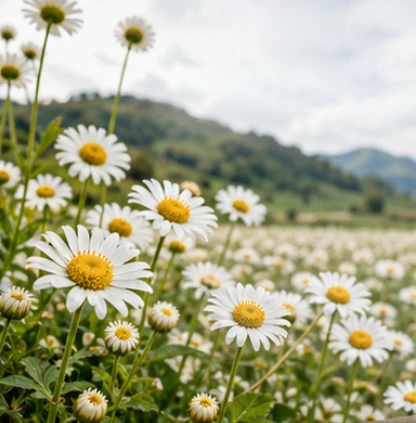 Natural pyrethrins are extracts from the flowers of the pyrethrum (Tanacetum cinerariifolium), a plant in the Asteraceae family. They are a class of naturally occurring insecticidal active ingredients, mainly composed of six compounds: pyrethrin I, pyrethrin II, citrulline I, citrulline II, jasminoidin I, and jasminoidin II. These six components work synergistically, which is the source of the insecticidal efficacy of natural pyrethrins.
Pyrethroids are a class of biomimetic pesticides synthesized by chemists after studying the molecular structure of natural pyrethrin. The first generation of products appeared in the 1960s. After decades of structural optimization, there are now over 50 pyrethroid compounds on the market, including common varieties such as permethrin, cypermethrin, deltamethrin, and bifenthrin.
The names Pyrethrin and Pyrethroid differ by only a few letters in English-this is the source of confusion. However, their chemical nature, production methods, and regulatory attributes are completely different.
Source and Structure
The production of natural pyrethrin relies on agricultural cultivation. The two most important pyrethrum producing regions globally are Kenya and Yunnan, China-Kenya accounts for approximately 70% of global production, while Yunnan is China's main raw material base and Asia's most important source of supply.
After harvesting, the flowers are dried, extracted using solvents, or through supercritical fluid extraction to obtain an extract containing six active ingredients. This extract is typically labeled with its total pyrethrin content, commonly available as an oily extract at concentrations of 25% or 50%.
Natural extracts are characterized by their complex yet natural composition-the proportions of the six compounds are determined by the plant itself. The ratio of Pyrethrin I to Pyrethrin II varies depending on the origin and harvesting season, directly affecting the strength and speed of insecticidal activity.
Pyrethroids, on the other hand, are entirely derived from chemical synthesis, not relying on agricultural raw materials. Their production costs are stable and controllable, their active ingredients are highly pure, and their structures can be precisely designed. Different synthetic routes determine the differences in characteristics among different varieties-for example, deltamethrin is known for its rapid knockdown rate, bifenthrin has a long soil residual effect, and permethrin is one of the few pyrethroids with relatively low toxicity to mammals.
While their insecticidal mechanisms are similar, their key properties differ significantly
Both act on the same mechanism: binding to sodium ion channels in insect nerve cells, delaying channel closure, leading to sustained nerve discharge, and ultimately paralyzing and killing the insect.
However, they differ considerably in several key properties:
Photostability: Natural pyrethrin degrades rapidly under light, and its effectiveness under outdoor exposure is typically only a few hours to a day or two. This is its biggest limitation and the core motivation for chemists developing pyrethroids-to improve photostability through structural modification. Pyrethroids, on the other hand, can maintain their effectiveness outdoors for weeks or even longer, a significant advantage in agricultural applications.
Mammalian Toxicity: Natural pyrethrin has relatively low toxicity to mammals, is metabolized quickly, and does not accumulate in the body. The toxicity of pyrethroids varies greatly depending on the species-some species have very low toxicity to mammals, while others require caution, especially type II pyrethroids (containing an α-cyano group) which are significantly more toxic to mammals than type I.
Aquatic Toxicity: Both are highly toxic to fish and aquatic invertebrates, but natural pyrethrin degrades rapidly, resulting in a lower actual environmental residue risk compared to most pyrethroids. This is an important consideration in agricultural settings near water bodies.
Impact on Bees: Both are toxic to bees. Natural pyrethrin degrades rapidly, significantly reducing the risk of bees returning to their hives within hours of application; some pyrethroids have longer residual effects, extending the risk to bees. Application during bee activity periods is a common contraindication for both.
Regulatory Status

Organic Certification Systems: This is the most significant dividing line between the two. Natural pyrethrin is listed as a plant-derived pesticide permitted for use in organic agriculture by the US National Organic Program (USDA NOP), the EU Organic Agriculture Regulation (EU 2018/848), and the OMRI (Organic Materials Review Institute), but usually with restrictions (such as prohibition of combination with synergist ether PBO in some certification systems). Pyrethroids are synthetic chemicals and are not permitted in any major organic certification systems. There are no exceptions. If your client is an organic farming brand or a product requiring organic certification, pyrethroids are not relevant to this discussion.
Pet Products:
Natural pyrethroids are permitted for use in canine deworming products at appropriate concentrations, but pose a toxic risk to cats (cats lack glucuronidase and cannot effectively metabolize them), requiring strict control over their use.
Among pyrethroids, permethrin is widely used in canine flea and tick products, but it is also highly dangerous to cats, with numerous cases of misuse reported in the market. The use of other pyrethroid varieties in pet products requires confirmation of their regulatory status on a case-by-case basis.
Household Insecticides:
Both are widely used in household insecticides. Natural pyrethroids command a higher price point due to their "natural origin" label, while pyrethroids dominate the mass market for mosquito coils, liquid electric mosquito repellents, and sprays due to their long-lasting effect and lower cost.
Global Market Registration
This is a complex topic. Registration requirements for specific varieties vary significantly across different countries, requiring confirmation on a market-by-market basis. However, a general trend exists: registration barriers for natural pyrethroids are generally lower than for synthetic pyrethroids in major global markets, especially in the EU, where some pyrethroid varieties are already under pressure to have their registrations revoked.
Procurement Decision Framework
Quickly identify your need for raw materials using three questions:
Does the product require organic certification or a natural claim? Yes → Only natural pyrethroids can be used. No → Both can be considered.
Is the product intended for outdoor agriculture or indoor/pet use? Outdoor applications require high sustained efficacy → Pyrethroids are more practical; indoor or short-acting applications → Natural pyrethroids are sufficient and have lower compliance risks.
What is the target market's attitude towards synthetic pesticides? The EU market is tightening its control over synthetic pyrethroids; in the long term, naturally derived raw materials offer higher compliance stability.
We provide both types of raw materials, including different grades of natural pyrethroid extracts and multiple varieties of pyrethroid raw materials. If you are developing a product or evaluating a supplier, please email chriswang@sheerherb.com to explain your application scenario. We will recommend suitable specifications and arrange to send samples.