When CBD brands communicate with raw material suppliers for the first time, they often get stuck on this point: the supplier asks whether you want isolate or extract, and if the latter, whether it should be broad-spectrum or full-spectrum. While these terms might sound like different names for the same thing, they actually represent completely different forms of raw material-forms that determine what your product can and cannot do.

Full-Spectrum Extract
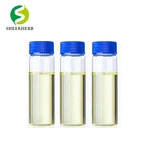
Full-spectrum extract is a product derived from industrial hemp that retains the vast majority of the plant's active ingredients. In addition to CBD, it contains other cannabinoids (such as CBG, CBN, and CBC), terpenes, flavonoids, and trace amounts of THC.
"Trace amounts of THC" is the defining characteristic-and the biggest limitation-of full-spectrum extract. For compliant extracts derived from industrial hemp, THC content is typically kept below 0.2% or 0.3%; however, the presence of even this trace amount can directly impact the product's legal saleability in certain markets.
Proponents of full-spectrum extract argue that the coexistence of multiple cannabinoids and terpenes creates an "Entourage Effect," resulting in an overall effect superior to that of any single ingredient. While this theory is both supported and debated in academic circles, it serves as the core marketing rationale for full-spectrum products.
Best for: Brands facing no restrictions on residual THC, those wishing to emphasize a "whole-plant" concept, and those targeting consumers with a high level of product knowledge. Common applications include essential oils and certain high-end health supplements.
Not suitable for: Markets with zero tolerance for THC, products intended for athletes (as THC appears on the banned substance lists of most sports organizations), or product lines that must explicitly exclude psychoactive substances.
Broad-Spectrum Extract
Broad-spectrum extract can be understood as a "THC-free version" of full-spectrum extract. Through processes such as chromatographic separation, THC is selectively removed while CBD, other cannabinoids, and terpenes are largely preserved.
Theoretically, broad-spectrum extract offers the best of both worlds: it provides the benefits of the entourage effect while remaining free of THC. However, there is a practical issue: the THC-removal process inevitably affects other constituents, with the loss of terpenes being particularly significant (due to their high volatility, they easily dissipate during processing).
The retention of constituents varies widely among broad-spectrum extracts from different suppliers. Some are nearly identical to full-spectrum extracts-save for the absence of detectable THC-while others undergo extensive purification, effectively becoming a mixture of high-purity CBD with trace amounts of other cannabinoids.
Therefore, when sourcing broad-spectrum extracts, one should request a full cannabinoid profile and terpene profile in addition to the CBD content listed on the Certificate of Analysis (COA) to accurately assess the richness of the raw material's composition.
Best for: Products marketed as "THC-free" that still aim to leverage the concept of the "entourage effect" (synergy); brands that value natural ingredients and sourcing stories but need to avoid THC-related risks.
Price Point: Typically falls between full-spectrum extracts and CBD isolate; however, due to the complexity of the processing involved, some premium broad-spectrum extracts can be just as expensive as full-spectrum ones.
CBD Isolate
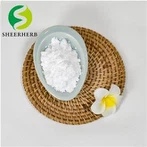
CBD Isolate is a crystalline powder consisting of pure CBD obtained through extensive purification. It typically boasts a purity of 98%–99.9% and is virtually free of THC, other cannabinoids, and terpenes. It appears as a white or off-white crystalline powder and is odorless or has a very faint scent.
From a formulation perspective, CBD isolate offers the greatest flexibility among the three forms. Free from the interference of other compounds, it allows for easier control of dosage, more predictable stability, and greater control over the sensory experience. For products requiring precise labeling of content per serving (such as gummies or capsules), the standardized nature of isolate offers a distinct advantage.
For markets with strict compliance requirements, isolate is the safest choice; its simple composition makes it easiest to prepare the necessary regulatory documentation and quality control reports.
Its limitations include: a lack of the "entourage effect," which somewhat restricts marketing claims; and difficulty aligning with a brand narrative centered on "whole-plant natural origins," as isolate does not fit well into that story.
Best for: Products requiring precise dosage control, such as gummies, capsules, cosmetics, and beverage additives; brands seeking simple formulations and clearly defined ingredients.
Price Point: Typically the lowest among the three forms, due to standardized production processes and relatively straightforward purity verification.
 Three questions to answer before purchasing
**What is the target market's stance on THC?** This single question can essentially rule out one or two of the forms.
**What is the core product claim?** If the focus is on "natural, whole-plant" qualities, full-spectrum or broad-spectrum extracts offer stronger support; if the focus is on "precise dosage" or "pure ingredients," isolate powder is more suitable.
**What is the final dosage form?** Isolate powder offers the most consistent control for gummies and capsules, whereas full-spectrum or broad-spectrum extracts provide a more nuanced sensory experience for tinctures/oils.
Once these three questions are clarified, the choice of raw material type naturally narrows down. If you are currently in the evaluation stage or require samples, please email chriswang@sheerherb.com; we can provide both samples and the corresponding comprehensive test reports.