Latest Products



Contact Us
- Room 1204, Vanke Huizhi Center, No. 56 Xifeng Road, Yanta District, Xi'an, Shaanxi, China.
- Chriswang@sheerherb.com
- +86 132 8987 3310


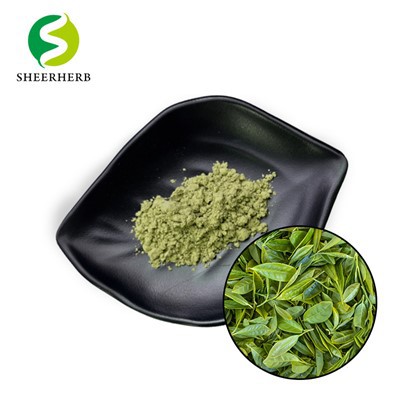


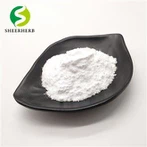
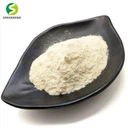
Matcha Powder Private Label
Product Name: Matcha Powder
Specifications: 100% pure
Processing Type: Steamed
Specialties: Health Tea, Organic Tea, Slimming Tea
Origin: Shaanxi, China
Shelf life: 24 months
Particle size: 800-1000 mesh
OEM Service: Available
Storage type: sealed and stored in a cool and dark place
Certificate: ISO/USDA Organic/EU Organic/HALAL/KOSHER
Third Party Testing: Yes
Description
Historical background of matcha
Three stages of matcha development:
1. In the stage of hazy origin, it is used as a medicinal material. In the book "Shen Nong's Materia Medica", it was pointed out: "Shen Nong tasted a hundred herbs, encountered seventy-two poisons every day, and got tea to solve them." About 2700 BC, Shen Nong chewed tea leaves and swallowed them into his stomach. It is the first step for human beings to drink tea, and it is known as "the originator of matcha tea".

2. The Stage of Slow Development.During the Tang Dynasty, people invented steamed green loose tea (tencha) and refined methods for evaluating the color and aroma of tea, making it an essential daily beverage. "The Book of Tea" notes: "...beginning of steaming, it enters the Tan, and when it is cooked, it comes out of the Tan. The cauldron is poured into the steamer, and it is made of grain, wood, branches, and Sanya. The steamed bamboo shoots and leaves are scattered, and the leaves are afraid of flow. Its ointment."
In the Song Dynasty, tea culture evolved into tea banquets. Cai Xiang, a renowned tea critic and esteemed writer of that era, described the method of preparing matcha in "Tea Records": break lump tea into small pieces, grind it into fine powder, sift out the tea powder, place two coins' worth into a scalded tea cup, pour boiling water, and evaluate the color, aroma, and taste of the tea. The finest tea is considered the best.
Ru Dunhe of the Qing Dynasty mentioned in "Yue Yan Shi" that in ancient times, tea was indispensable. Matcha, referred to as tea, was a pinch of finely ground tea served with a selection of good fruit snacks, collectively known as "snacks and tea."

3. The rapid advancement in the cultivation of tea, shading techniques, and breeding technology has significantly improved the quality of raw materials for matcha production. Additionally, advancements in green steaming equipment have greatly enhanced the quality of matcha, while developments in ultrafine powder grinding technology have significantly increased production speed and reduced costs. These innovations have made matcha, once an ancient luxury item, accessible to the general public.
Concurrently, the rapid pace of industrialization and urbanization has exacerbated environmental and health issues, leading to a rise in chronic diseases and a growing public concern for health and nutrition. This has fueled the rapid development of natural nutrition and health products like matcha, meeting the increasing demand for such products among health-conscious consumers.

Matcha Making
Matcha powder is an ultra-fine powder made from tencha made of shading tea, and then ground by a matcha grinder. Only high-end matcha powder pursues greenness. The greener the higher the value, the correspondingly the more difficult it is to make the greener. There will be more stringent requirements for tea varieties, planting methods, planting areas, processing techniques, and processing equipment. Varieties such as Bibei, Zhongcha 36, and Aolu are particularly green in color. If they are shaded by a greenhouse, the color and taste of the matcha produced will be particularly good, and they can be regarded as raw materials for high-end matcha.
The raw material of Matcha is tencha, which is made only from spring tea. In addition to strict fertilizer and water management, there are two key words in its production: covering and steaming. 20 days before spring tea is picked, scaffolding must be set up, covered with reed curtains and straw curtains, the shading rate can reach more than 98%, and there are also simple coverings, covered with black plastic gauze, the shading rate can only reach 70% to 85%. Experiments have proved that using objects of different materials and colors to shade tea has different effects.

Japanese scholar Yaozi Zhujing's research shows: "Covering and shading changes environmental factors such as light intensity, light quality, and temperature, thus affecting the formation of tea aroma quality. Outdoor tea does not contain B-santalol, benzoic acid and its esters, except In addition to the higher content of low-level aliphatic compounds, the content of other aroma components is significantly lower than that of shade tea". The chlorophyll and amino acids of the covered green tea leaves are significantly increased, the carotenoids are 1.5 times that of open-air cultivation, the total amount of amino acids is 1.4 times that of natural light cultivation, and the chlorophyll is 1.6 times that of natural light cultivation.
The picked fresh tea leaves are dried on the same day, using the steam method. The studies of Japanese scholars Fukatsu Osamu and Shang Michiko respectively showed that during the steaming process, the oxides such as cis-3-hexenol, cis-3-hexene acetate and linalool in tea increased in a large amount, and produced There are a lot of ionone compounds such as A-ionone and B-ionone. The precursors of these aroma components are carotenoids, which constitute the special aroma and taste of Matcha. Therefore, the green tea cultivated under cover and steamed under cover tea not only has a special aroma, but also has a green color and a more delicious taste.
Application of matcha
Matcha is the main tea widely consumed by the Japanese people, forming the Japanese tea culture - Japanese tea ceremony. The Japanese tea ceremony is divided into two major "schools", the matcha ceremony and the sencha ceremony, but the matcha ceremony is the most representative, and its number of "disciples" is unmatched by the sencha ceremony. The most influential in Japan are the "Omote Senke" and "Satosenke" tea ceremonies of the matcha ceremony, which spread widely and prevailed all over the country, promoting the popularization of Japanese tea drinking customs, and thus promoting the widespread use of tea by the Japanese people. The annual per capita tea consumption in Japan reaches 1.09 kilograms (the average daily consumption of tea in China is only 0.38 kilograms). Japan is one of the countries with the longest average life expectancy in the world, which is not unrelated to their extensive drinking, eating and consumption of tea.
In Japan, the Matcha industry has grown enormously. Matcha has no additives, no preservatives, and no artificial coloring. In addition to direct drinking, it is widely used as a nutritional enhancer and natural coloring additive in many industries such as food, health care products and cosmetics, and a wide variety of Matcha sweets are derived:

Food: moon cakes, biscuits, melon seeds, etc., ice cream, noodles, matcha chocolate, matcha ice cream, matcha cake, matcha bread, matcha jelly, matcha candy

Beverages: canned beverages, solid beverages, milk, yogurt, canned matcha beverages, etc.

Cosmetics: beauty products, matcha mask, matcha powder, matcha soap, matcha shampoo, etc.

You Might Also Like