Products Description
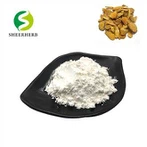
A ubiquitous chemical molecule found in most nutritional supplements and cosmetics, dimethylaminoethanol bitartrate (or DMAE bitartrate for short) is made up of the organic compounds dimethylethanolamine and tartrate. It is a white crystalline powder at room temperature.
Chemical structure and properties
Chemical name: dimethylethanolamine bitartrate
Chemical formula: C₅H₁₂N₂O₄·C₄H₆O₆
Molecular weight: 288.27 g/mol
Appearance: usually white crystalline powder

Main uses
1.Nutritional health products: They help manage symptoms such childhood enuresis, tardive dyskinesia, and hyperactivity in children, and they can be used to treat AIZhemer's disease.
2.Cosmetics and skin care products: Dimethylaminoethanol has a pH that is similar to that of human skin because it is a salt. It will be applied in preparing for topics. An essential part of cell membranes is choline. Structurally, DMAE is comparable to choline. A precursor of acetylcholine, choline is involved in the stimulation of muscular contraction. Skin tightening is one of DMAE's effects. It has successfully tightened neck skin, enhanced lip fullness, and decreased wrinkles in certain clinical trials. Face cleansers, face creams, and moisturizers are among the product categories. It can also effectively improve the appearance of the skin and has anti-aging properties.
3. Dietary supplements: DMAE has been shown to enhance memory and focus in the brain. It is a very powerful enhancer of cognitive function. In addition, it can also improve people's bad mood and make people feel stable and comfortable.
Industrial applications
Dimethylethanolamine is used as a curing agent for polyurethanes and epoxy resins. It is also used in large quantities for water treatment. It is also used in the synthesis of dyes, textile auxiliaries, pharmaceuticals, emulsifiers, and corrosion inhibitors, paint removers, and as an additive for boiler water. Some of its salts have melting points below room temperature (ionic liquids), such as its acetate and octanoate salts, and are used to replace some traditional solvents. Dimethylethanolamine is widely used in pharmaceutical manufacturing.

Mechanism of action
1. The neurotransmitter DMAE is the precursor of acetylcholine, which is one of the most widely distributed neurotransmitters in the nervous system and a crucial part of numerous neuronal signal transmission systems. The body can produce choline, an essential neurotransmitter that is particularly required for the nervous system's neurotransmission and motor control.
It is hypothesised that DMAE influences the composition and functionality of cell membranes, possibly enhancing the stability and general health of the membranes. Chemical exchange and the maintenance of the intracellular and extracellular environments are crucial functions of cell membranes. Changes in the membrane's lipid composition, fluidity, and stability, as well as the operation of ion channels and receptors, are all potential consequences of DMAE on cell membranes.
2. Based on current theories, DMAE may improve the stability and overall health of cell membranes by changing their structure and function. The maintenance of the extracellular and intracellular environments as well as the transfer of materials are crucial functions of cell membranes. A variety of effects of DMAE on cell membranes include changes in lipid composition, increased fluidity and stability, and adjustments to ion channel and receptor activity.
The electrophysiological characteristics and signal transmission mechanisms of cells can be affected by these effects, which can control ion flow both inside and outside of cells.
3.Free radical production and cell damage may be minimized by DMAE, which is thought to possess certain antioxidant qualities. It is possible to lessen the damage that free radicals cause by using antioxidants like DMAE. Oxidative stress and subsequent cell damage can be caused by free radicals, which are extremely reactive chemicals that can react with biological components within cells as well as cell membranes.
4.Empirical evidence suggests that DMAE may impact cognitive function through mechanisms other than acetylcholine elevation. Accutylcholine is one neurotransmitter that is necessary for cognitive function, which encompasses memory, learning, attention, and other functions.