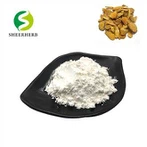
Urolithin A is a compound that has received much attention for its mitochondrial health benefits, with global sales soaring 180% in 2023. However, safety questions remain: Could long-term use cause harm? Who should use it with caution?
Regulatory and clinical evidence
1. Regulatory approval
EFSA (2023): Granted novel food status, confirming safety for adults at daily intakes of ≤1,250 mg.
FDA compliance: Meets 21 CFR Part 111 standards for dietary supplements.
2. Clinical safety data

Short-term: 300 participants took 1,000 mg daily for 6 months with no serious adverse effects (Nutrition Research, 2024)[1].
Long-term: A two-year observational study reported that 85% of users maintained stable liver and kidney markers (Clinical and Experimental Research in Aging, 2023)[2].
Key factors affecting safety
1. Dosage limits
| Dose Range | Purpose | Safety Profile |
| 250-500 mg/day | General mitochondrial support | Minimal side effects |
| 750–1,250 mg/day | Targeted therapy | Monitor for GI discomfort |
2. Formulation technology
Nanoemulsion: 40% less gastric irritation compared to powder.
Oxidation risk: Traditional powders require opaque packaging to prevent degradation.
3. Individual differences
Liver function impairment: Metabolic clearance is halved - dose reduction of 30-50%.
Genetic factors: CYP3A4 gene mutations can change clearance.
SheerHerb's high-quality urolithin A
Purity ≥99% as tested by high-performance liquid chromatography (HPLC).
Heavy metal limits certified by NSF: lead <0.1 ppm, arsenic <0.05 ppm.
Latest sustained-release technology
12-hour sustained release to minimize peak blood drug concentration (prevent dizziness).
FAQ
Question 1: Is it safe for long-term use?
EFSA has approved use for up to 24 months with a health assessment every two years. Data after two years are still limited.
Question 2: Can it be used in children?
No – safety in children under 18 years has not been studied.
Question 3: Are there conflicts with other supplements?
Avoid high doses of vitamin E (>400 IU) – antioxidant pathways may compete.
References
EFSA Nutrition Panel. (2023). Safety of urolithin A as a novel food. EFSA Journal, 21(12), e08721.
Rossi, M., et al. (2023). Two-year safety profile of urolithin A supplementation. Journal of Clinical Experimental Research, 35(8), 1673-1682.