Latest Products



Contact Us
- Room 1204, Vanke Huizhi Center, No. 56 Xifeng Road, Yanta District, Xi'an, Shaanxi, China.
- Chriswang@sheerherb.com
- +86 132 8987 3310

Fisetin Supplement
Product Name: Fisetin
Type: Herbal Extract
Variety: Fisetin
Extraction Type: Solvent Extraction
Place of Origin: Shaanxi, Chinabr>
Brand Name: Newgreen
Application: Food
Size: 98%
Shelf Life: 2 Years
Storage: Cool Dry Place
Packaging: Drum, Plastic Container, Vacuum Packed, 1kg/Bag
Cultivation method: Wild
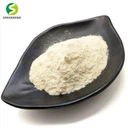
Appearance: Yellow powder
Sample: Avaiable
Description
What is Fisetin?
Fisetin, also known as fisetin or fisetin, is a flavonol derived from plants. Fisetin was first extracted from sumac (German: Fisetholz) by Jakob Schmid in 1886, so it is also called sumacin. Since sumac belongs to the Anacardaceae family, fisetin is also called sumac flavonoids. Its chemical formula was first determined by Josef Herzig in 1891. Fisetin is a common plant pigment found in many common vegetables and fruits such as strawberries, apples, persimmons, onions and cucumbers.

One of the flavonoids in particular has been studied, fisetin. It is theorized that fisetin is a flavonol molecule similar to the flavonols found in dark chocolate and cocoa. Trace amounts of fisetin can also be found in certain fruits and vegetables.
Based on existing research, strawberries are found to be particularly high in fisetin, followed by apples. The content of fisetin in strawberries is about five times that in apples, and it is generally more than thirty times that in mangoes, kiwis, grapes, tomatoes, onions, cucumbers and various nuts.
However, the levels of fisetin in these foods are still not high enough to compare with the levels of fisetin in dietary supplements. In Japan, the estimated average daily intake of fisetin is 0.4 mg. As a dietary supplement, the recommended daily dose of fisetin should be 100 mg.
The specification of Fisetin
| Items | Specification | Result |
| Appearance | Yellow Powder | Complies |
| Odor | Characteristic | Complies |
| Particle Size | 100% through 80 mesh | Complies |
| Loss on Drying | ≤5.0% | 1.45% |
| Melting Point | 130~142℃ | Complies |
| Stigmasterol | ≥15.0% | 23.6% |
| Brassicasterol | ≤5.0% | 0.8% |
| Campesterol | ≥20.0% | 23.1% |
| β-Sitosterol | ≥40.0% | 41.4% |
| Other Sterol | ≤3.0% | 0.71% |
| Total Sterols Assay | ≥90.0% | 90.06%(GC) |
| Pb | ≤10ppm | Complies |
| Microbiological Data | ||
| Total Aerobic Count | ≤10000cfu/g | Complies |
| Yeast & Mold | ≤1000cfu/g | Complies |
| E.Coli | Negative | Complies |
| Salmonella | Negative | Complies |
Products Description
Like other sources of flavonoids such as quercetin, resveratrol, and grape seed extract, fisetin exerts a myriad of beneficial effects. The focus of this article will be on the unique effects of fisetin on brain health, cognition and memory.
Fisetin optimizes brain health by:
● Activate the antioxidant mechanism to protect brain cells from damage
Boosts glutathione levels in brain cells to further protect the brain,while optimizing detoxification and boosting cellular energy.Supports the growth of new brain cells.

● Stimulates and assists brain circuits and brain signaling pathways involved in long-term memory function
Much of the research on fisetin for brain health has been conducted at the prestigious Salk Institute for Biological Studies in San Diego, focusing on fisetin as a "nootropic" and "neurotrophic factor" to study. The so-called "nootropic substances" refer to substances that can strengthen memory and brain function. Several other natural compounds that play this role include Hericium erinaceus extract, PQQ with CoQ10, resveratrol, and curcumin.
What sets fisetin apart is its role as a neurotrophic factor. This class of compounds supports the survival, differentiation, and maintenance of function of brain cells. In other words, what makes fisetin different is that, in addition to helping brain cells function better, as a neurotrophic agent, fisetin also plays a role in optimizing what's known as "brain plasticity." Brain plasticity refers to the brain's ability to respond to develop new or restore old brain circuits. Brain plasticity is important for normal brain functions such as learning and memory. Therefore, by acting as a neurotrophic agent to optimize brain plasticity, fisetin can actually lead to optimization of brain circuits and brain signaling pathways related to long-term memory function.
Of all the flavonoids tested and applied in animal models of age-related brain changes, only fisetin and a related trace flavonol proved to be superior.
How does Fisetin work?
Fisetin crosses the blood-brain barrier to produce its effects as a nootropic and neurotrophic agent through a very complex set of mechanisms. While fisetin works a bit differently than other compounds, it does work in many of the same ways as other flavonoids. For example, fisetin shares some anti-aging properties with resveratrol. It is a potent anti-aging agent, which means it helps the body and brain get rid of old cells, creating a "pruning" effect that allows healthy cells to flourish or replace old cells. In this capacity, fisetin was about twice as effective as quercetin.
Like other flavonoids, fisetin also enhances the production of glutathione, a key antioxidant and detoxifying agent in our cells. Optimizing glutathione levels in the brain yields various benefits, as the brain is better able to protect itself from damage and has higher cellular energy levels.
One of the key roles of fisetin is to initiate the so-called ERK pathway. ERK is an abbreviation for "extracellular signal-regulated kinase", extracellular refers to the periphery of the cell, and kinase refers to a class of enzymes. So ERK is when something outside the cell signals the inside of the cell to activate the kinase.
Fisetin helps brain cells produce proteins that are critical to brain cell structure and function, especially at communication nodes between cells known as synapses. It also reduces various inflammatory responses within synaptic connections.
By activating the ERK pathway, fisetin optimizes brain cell structure and function. This means it can help optimize cognition and memory. This effect has been repeatedly demonstrated in preclinical studies.

What is the recommended dosage of fisetin?
There are only two human studies on fisetin, and both have used a daily dose of 100 mg. This dose is calculated based on extensive animal data showing efficacy and safety, and is calculated for human use in accordance with FDA guidelines.
You Might Also Like