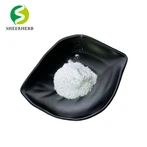
1. Overview of apigenin
Apigenin, also known as apigenin and apigenin, is a flavonoid compound. It is widely distributed in nature. It is mainly found in plants of the Thymelaeaceae, Verbenaceae, and Selaginellaceae families, and is widely distributed in vegetables and fruits in warm and tropical regions, especially in celery. Apigenin has multiple biological activities such as anti-tumor, cardiovascular and cerebrovascular protection, antiviral, and antibacterial.

2. Sources of apigenin
Apigenin can be found in many fruits, vegetables, and herbs, including parsley, celery, chamomile, kumquat, mint, and coriander. Among them, the content in parsley is particularly rich. Dried parsley usually contains about 4-5 mg of apigenin per gram, dried chamomile flowers contain about 3-5 mg (per gram) of apigenin, and fresh parsley contains about 2.15 mg of apigenin. Currently, the main source of low-content apigenin on the market is chamomile, and the high-content mainly comes from grapefruit peel.

3. Health Benefits of Apigenin
More effective antioxidant
Mohammad Adnan's research focuses on creating a skin-applied gel containing apigenin, using a method that ensures effective delivery to the skin. The optimized gel showed significantly better apigenin release and permeability compared to conventional gels [1].
Cardiovascular protection
Kun Xu and his research team published findings on how apigenin protects the heart from oxidative stress damage. They demonstrated that apigenin significantly reduces damage and improves cardiomyocyte health by activating the SIRT1 signaling pathway, a key factor in cellular stress response and longevity. This suggests that apigenin may be a promising natural treatment option for cardiovascular disease [2].
Anti-inflammatory effect
Saima's study investigated the benefits of apigenin in treating interstitial cystitis. Apigenin has been shown to reduce inflammation and oxidative stress in the bladder by inhibiting harmful pathways and enhancing antioxidant defenses. In addition, apigenin also helps relax bladder muscles, suggesting its potential as a treatment for overactive bladder and interstitial cystitis [3].
Anti-aging effect
Yu Cheng's research team found that apigenin and Chrysin can extend the lifespan of C. elegans by slightly inhibiting mitochondrial function, a strategy known as the mitochondrial hormone effect. The mitochondrial hormone effect involves a temporary increase in reactive oxygen species (ROS), which surprisingly enhances the worms' ability to handle oxidative stress and adjust their metabolism, extending lifespan by 23%. This study highlights the importance of certain genes in these lifespan extensions, pointing to a promising approach to using apigenin to delay aging and combat age-related diseases [4].
Neuroprotective effect

Alyssa Cavalier and colleagues explore apigenin's effects on the aging brain, specifically with regard to cognitive decline and dementia risk. Studies have shown that older mice given apigenin showed improved memory and learning abilities. They also revealed that these effects may be driven by apigenin's effects on genes related to immune response, inflammation, and neuronal function, suggesting that it may combat age-related cognitive decline through its regulation of these processes[5].
4. Application fields of apigenin
Dietary supplements
Capsules, tablets, powders and other forms.
Functional foods
Added to drinks, meal replacement powders, snacks.
Medical field
Used as an auxiliary therapeutic agent in anti-inflammatory, anti-cancer and other fields.
Cosmetics
Applied in antioxidant skin care products to promote skin health.

Sheerherb provides one-stop private label customization services, whether it is raw materials or finished products, please contact us if you have any needs.
[1] Adnan, M.; Afzal, O.; S. A. Altamimi, A.; Alamri, M.A.; Haider, T.; Faheem Haider, M. (2023) Development and Optimization of Transethosomal Gel of Apigenin for Topical Delivery: In-Vitro, Ex-Vivo and Cell Line Assessment. Int J Pharm, 631, 122506.
[2] Xu, K.; Yang, Y.; Lan, M.; Wang, J.; Liu, B.; Yan, M.; Wang, H.; Li, W.; Sun, S.; Zhu, K.; et al. Apigenin Alleviates Oxidative Stress-Induced Myocardial Injury by Regulating SIRT1 Signaling Pathway. (2023) Eur J Pharmacol, 944, 175584
[3] Saima; Anjum, I.; Mobashar, A.; Jahan, S.; Najm, S.; Nafidi, H.A.; Bin Jardan, Y.A.; Bourhia, M. (2023) Spasmolytic and Uroprotective Effects of Apigenin by Downregulation of TGF-β and iNOS Pathways and Upregulation of Antioxidant Mechanisms: In Vitro and In Silico Analysis. Pharmaceuticals 2023, Vol. 16, Page 811, 16, 811
[4] Cheng, Y.; Hou, B.H.; Xie, G.L.; Shao, Y.T.; Yang, J.; Xu, C. (2023) Transient Inhibition of Mitochondrial Function by Chrysin and Apigenin Prolong Longevity via Mitohormesis in C. Elegans. Free Radic Biol Med, 203, 24–33
[5] Cavalier, A.N.; Clayton, Z.S.; Wahl, D.; Hutton, D.A.; McEntee, C.M.; Seals, D.R.; LaRocca, T.J. (2023) Protective Effects of Apigenin on the Brain Transcriptome with Aging. Mech Ageing Dev, 217, 111889.